
Auto-debit payment bounces have gone up for the second consecutive month in May, emphasising the stress building up due to a halt in economic activities as authorities lock down various parts of the country to stop the spread of the virus in the second wave. According to the National Automated Clearing House (NACH) data, in May, of the 85.7 million transactions initiated, 35.91 per cent, or 30.8 million transactions, failed.

The Mumbai Bench of the National Company Law Tribunal (NCLT) on Monday approved Piramal Group's resolution plan for the beleaguered Dewan Housing Finance Ltd (DHFL), which has been reeling from the insolvency process since 2019. The plan put forward by Piramal Group, which has offered to pay Rs 37,250 crore, has been approved by the committee of creditors (CoC), the Reserve Bank of India (RBI), and the Competition Commission of India (CCI).

Domestic equity markets are in elite company. In May, Indian markets joined select developed markets (DMs) such as the US, UK and Germany to record new all-time highs. Among emerging markets (EMs), Brazil is the other market to have logged new highs this month. Asian peers such as South Korea, Taiwan and New Zealand are currently between 2 per cent and 10 per cent below their previous highs made earlier this year. The domestic markets were among the worst-performing major global markets in April amid a lethal second-wave of covid-19 infections.

With India's market capitalisation surpassing the $3-trillion mark, stocks across the board are adding heft. The upper limit for qualifying as a mid-cap stock -under the Securities and Exchange Board of India's (Sebi's) definition for mutual fund reclassification - has hit an all-time high of $5.4 billion. In 2013, amid the taper tantrum sell-off, it had dropped to just $1 billion, shows an analysis done by ICICI Securities.

Private equity firm Carlyle Group and associates will acquire a controlling stake of over 50 per cent in PNB Housing Finance by investing in the Rs 4,000 crore preferential issue of equity and warrants of the Delhi-based mortgage lender. After the proposed transactions, expected to be completed by January 1, 2022, Carlyle will also have the right to nominate the chairperson of PNB Housing Finance (PNB HF). This right will continue as long as it holds at least 40 per cent of the share capital on a fully diluted basis.

'Personally, I have reached that stage where I think material things can't give you any satisfaction.'


Public sector banks, including the country's largest lender State Bank of India (SBI), have come out with a templated approach for restructuring retail and small business loans of up to Rs 25 crore under the Reserve Bank of India's (RBI) Covid restructuring package 2.0. They have also come out with standardised products to make funds available to business entities for improving healthcare infrastructure and to individuals for meeting Covid treatment expenses. Business loans have been divided into three categories.

The country's dash to a $3-trillion market cap is more a case of teamwork, than a few members doing most of the heavy lifting. Sample this: The share of top 100 companies to India's total market cap (BSE-listed companies' m-cap) is 67.3 per cent currently, less than what it has been when the nation hit previous milestones, such as $1 trillion, $1.5 trillion in 2007 or $2.5 trillion more recently in December 2020. In 2007, when India's m-cap topped the $1-trillion mark for the first time, the top 100 companies accounted for three-fourths of the total m-cap; at $1.5 trillion, the share was almost 80 per cent.

Thirteen companies have joined the Rs 1-trillion-plus market capitalisation club this year, so far. This even as the benchmark Sensex has gained less than 3 per cent on a year-to-date basis, underscoring the bullish undercurrent in the broader market. The trend shows a harsh second wave of Covid-19, subsequent lockdowns, and hit to the economic activity has made little dent into India Inc or shareholders' wealth. At the start of the year, there were 29 companies with a market value of more than Rs 1 trillion.

Since April, India has seen multiple strains of the coronanavirus sweep the nation, upending life and businesses alike. Out-of-home retail and discretionary categories such as durables, auto, fashion, lifestyle, hospitality, food services, travel, and tourism have been the worst-hit as Covid cases remain high, leaving state governments with no option but to curtail mobility and economic activity.
The bank expects to grow loan book by 10 per cent in the current financial year with calibrated exposure to corporate accounts and thrust on the retail segment.

These products are extremely transparent and are the lowest charged products in the insurance space. The policyholder has to only pay the fund management charge. Hence, from the cost side, ULIPs are very competitive.

The finance ministry has asked public sector banks (PSBs) to postpone the annual exercise of promoting and transferring their staff in the wake of the Covid-19 pandemic. The advisory issued by the Department of Financial Services (DFS) states that the promotion process has coincided with a spike in Covid-19 cases across the country along with localised lockdowns and an increase in micro-containment zones. As there are cases of bank employees or their family members being hospitalised due to Covid-19, bank, insurance companies and financial institutions must take cognizance of the issue, the advisory issued by DFS said.

In 2020-21, Indian firms offered to buy back shares worth Rs 39,295 crore, or 97% more than Rs 19,972 cr proposed in the previous financial year.

At risk of entrenched rough times are sectors like hospitality and those with discretionary spends.

Covid-19, US yields, dollar to weigh on equity flows in the near term.
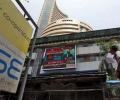
The 30-share bluechip index is rebalanced on a semi-annual basis with next rejig slated for June 18.

While the stocks met various other inclusion parameters, there were fears they may still get disqualified given the sharp run up in their stock prices.

The plan was to expand further, add more branches and also eventually become the third bank in India to start a wholly owned subsidiary after Singapore's DBS Bank and State Bank of Mauritius, but those plans never materialised due to lack of scale and rising non-performing assets in the country.
 © 2026 Rediff.com - Investor Information - Advertise with us - Disclaimer - Privacy Policy - Sitemap - Feedback - About us - Terms of use - Grievances